On time, in full, to specification, and the trays come back.
From the customer's delivery request to the last returnable tray back on the wash line. Every batch is inspected before it leaves, every tray loaded is matched to its order, and every delivery note carries the quality result.
Seven steps, each recorded once, by the person who did it.
- Delivery requestThe customer asks for delivery in the window, in the portal.Customer
- InspectSampled against the specification. A pass is valid 21 days.Supervisor
- PreparePick batches against the order, build load units.Dispatch clerk
- ReadyLoaded on the tablet by scanning, then marked ready.Floor team
- DepartCarrier, vehicle and driver; delivery note issued.Dispatch
- DeliveredIn full or partial; problems reported with photos.Customer
- Trays backWithin 30 days, received at any nursery in the group.Customer & clerk
Who is waiting for plants, and how many days are left.
Delivery requests to deliver with their days left (red and negative when overdue), orders waiting for a request, and on-time percentage. A quality banner warns when batches for open requests have no valid pass.
A manifest that reconciles itself.
Each dispatch, numbered D-2026-0478 and so on, records picks by batch and quantity, and load units: trays, trolleys or pallets. A reconciliation line checks the manifest against the load units before the truck leaves.
- Manifest shows picked, delivered, short, damaged and returned, with each batch's quality status
- Delivery note printed with every batch's quality result; reissues keep every version
- Record exceptions: damage, shortage or refusal. Record returns
- Whether dispatch clerks may also confirm departure is set per customer
- Problem reports from the customer portal answered and resolved here
Nothing leaves without a pass, unless the customer agreed it may.
Batches ready now or within two weeks come up as due, with open-request batches first. Inspect plant by plant or by tally against the species' dispatch specification: height, root-collar diameter, a firm root plug, hardened off.
- Versioned specifications per species: min/max height, min RCD, pass level
- "Correct this inspection" keeps the original
- A diseased batch's relatives can be put on hold until inspected
Concessions
When a batch is just outside specification, the nursery manager can dispatch under concession, recording who at the customer agreed. The customer accepts or declines it in the portal.
Quality Report · FY2027 to date · first-time pass rate 91.4%
Quality report
First-time pass rate, culls, concessions, dispatches without a valid pass, and a Pareto of faults, so you fix the cause, not the symptom.
Tens of thousands of trays, every one accounted for.
Every tray movement is a ledger entry per nursery and tray type: new trays, sowing, dispatch, returns, washing, breakage, charges, transfers and counts. Stock is always calculated from the ledger, never typed in.
- Receive returned trays at any nursery, good or broken
- Wash & sterilise; trays from a diseased batch are flagged for sterilising
- Stock counts; a large difference needs a second manager's approval
- Trays with customers aged 0–30, 31–60 and over 60 days, with their value
- Charges for unreturned trays, which shrink if trays come back, or are waived with a reason
- Export issued charges: cost-centre recharges for internal customers, invoice lines for external ones
Clean trays when sowing needs them
A clean-tray forecast for the next twelve weeks compares sowings in the plan with trays expected back and washed, so you order or chase trays before the germination house waits.
Customers see their trays, overdue counts and can arrange a collection or drop-off in the portal.
Next month's trucks, from next month's orders.
Committed demand turned into trays, trolleys and truck loads per week, using plants per tray, trays per trolley and trolleys per truck. Book transport before the peak, not during it.
Truck & Trolley Planner · 98 plants a tray · 40 trays a trolley · 18 trolleys a truck
| Week | Committed demand | Trays | Trolleys | Truck loads |
|---|---|---|---|---|
| W45 '26 | 412,300 | 4,208 | 106 | 6 |
| W46 '26 | 688,950 | 7,031 | 176 | 10 |
| W47 '26 | 905,400 | 9,239 | 231 | 13 |
| W48 '26 | 541,120 | 5,522 | 139 | 8 |
Can't grow it in time? Buy it in, on the record.
A purchase request records the plant, quantity, needed-by week, priority and reason, and what procurement said: acknowledged, rejected or fulfilled. When the plants arrive they become a bought-in batch, with the partner nursery as the source, so the trace still works.
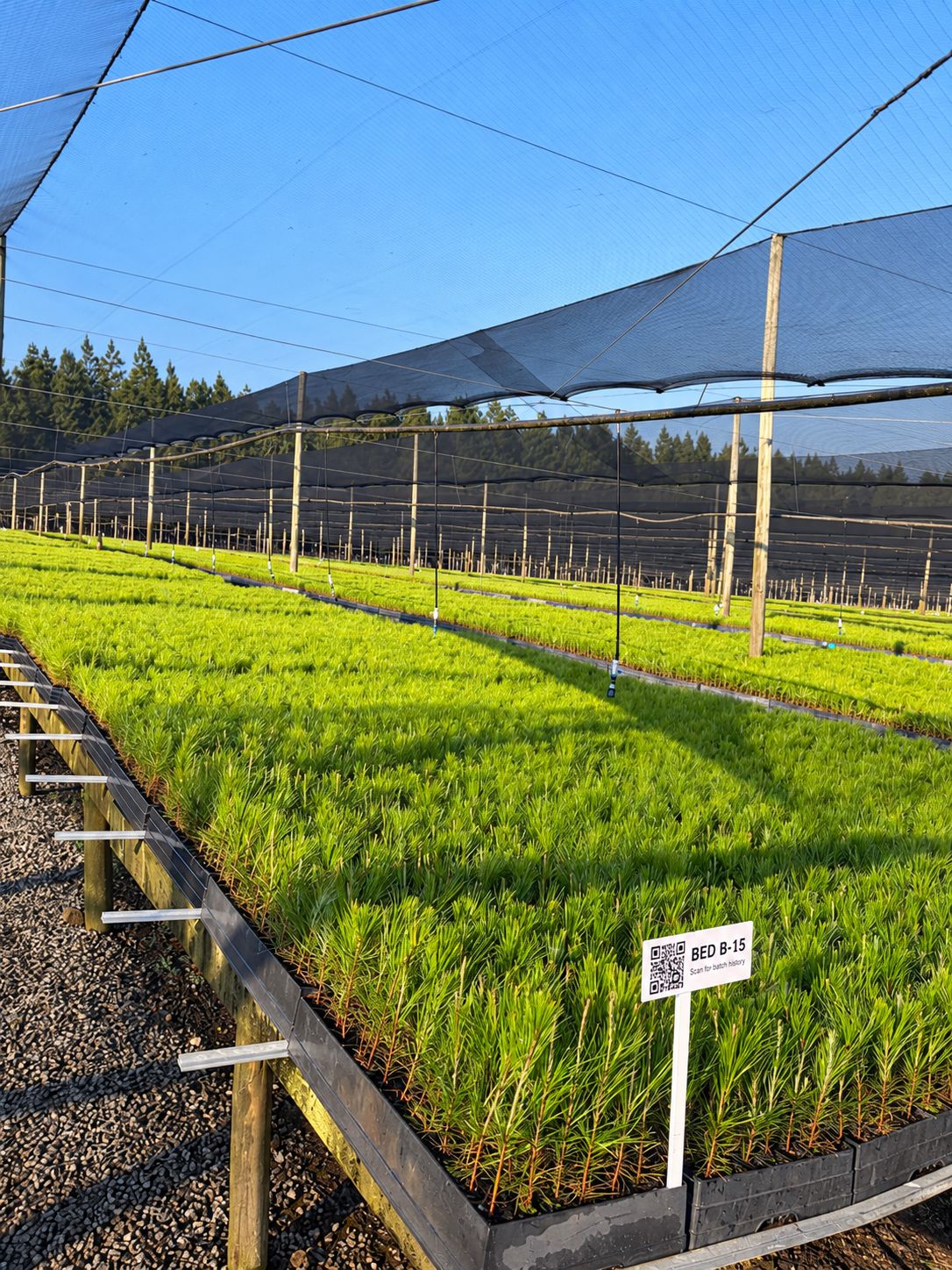
Be one of our first pilot nurseries.
We work closely with a small group of nurseries to set up OperoNMS on their sites. You get hands-on setup and training, your own nursery's layout and recipes loaded with you, and a direct say in what we build next.